
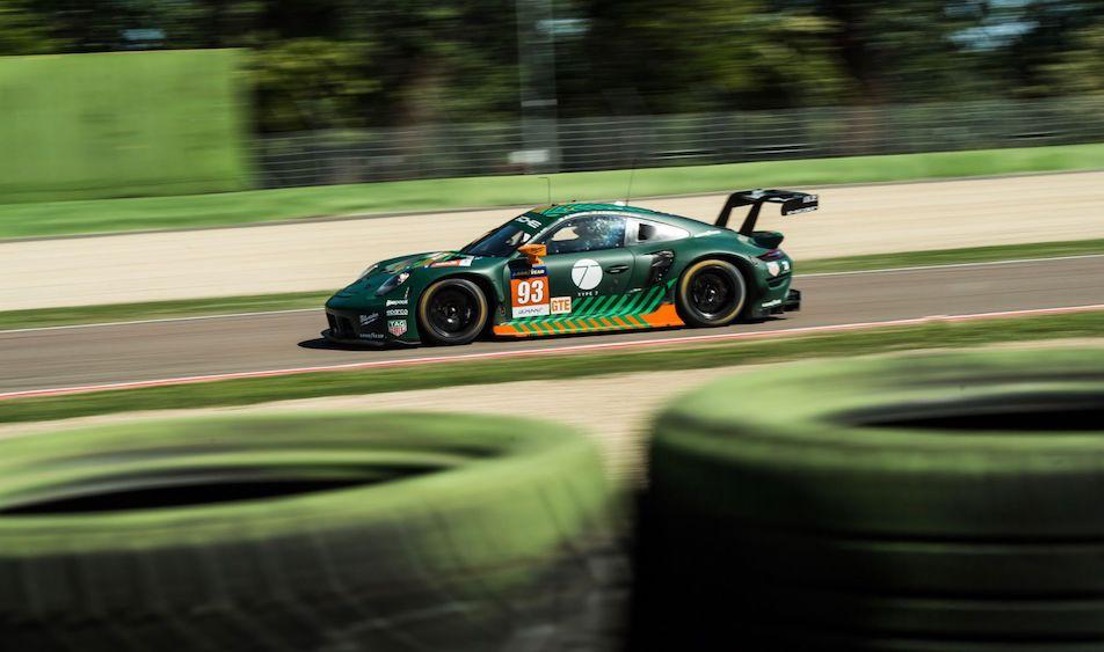
Selim Kuzu on the parallels between motorsport and data center construction.
An interview with Selim Kuzu, Board Member of SERBAN DC, conducted by Theresa Schönberger
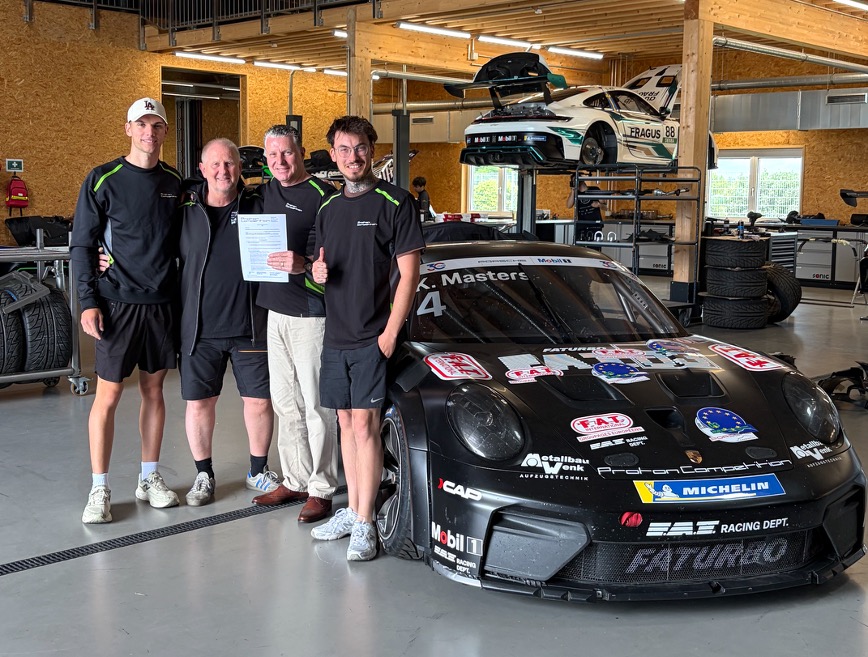
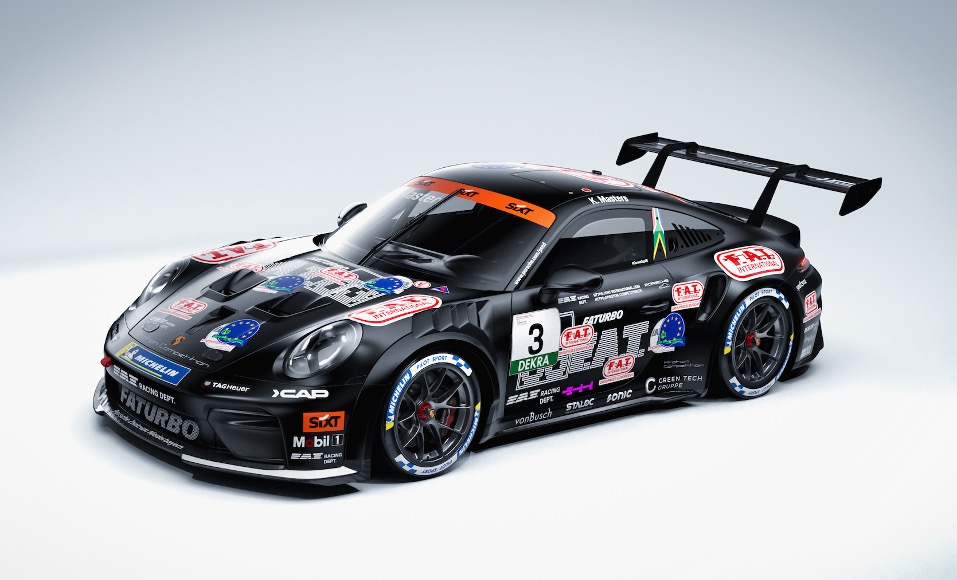
Today I am speaking with you as the new sponsor of the Proton Competition Porsche Racing Team. What motivated you to support this team?
Motorsport, and the Porsche Cup in particular, holds a very special place in Europe. The races are major events that attract fans from all over the world. Unlike in Formula 1, where every car is highly individual, all the teams here race a Porsche, and all the cars have the same engines and transmissions. It is the perfect balance of technical precision, teamwork, and driver skill that makes these races so fascinating and ultimately decides the outcome. That is why we identify with this team and are involved in the Porsche Cup and the Mobil 1 Supercup.
So this is about more than just speed?
Exactly. It is a combination of many different strengths: mental resilience, skill, technology, and relentless commitment. Behind it lie years of work, meticulous planning, and attention to detail. The engineering, the fine-tuning of the aerodynamics, the precise construction of the bodywork — all of this is the result of a professional team working together with the driver to make the difference.
What does motorsport have to do with your business — planning and building data centers?
More than you might think at first glance. In motorsport, just as in the planning and construction of modern data centers, everything comes down to meticulous planning, precision, teamwork, and absolute reliability. In motorsport, milliseconds often decide between victory and defeat — and in data centers, even the smallest deviations can have enormous consequences. In both fields, the best and most experienced people work together as a team.
In your view, what is decisive: the team and its engineers, or the driver's ability?
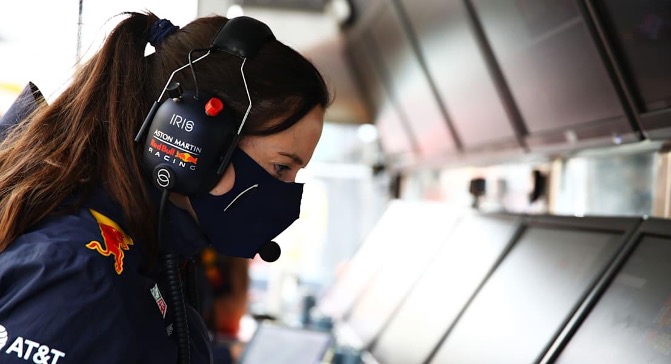
Both require the highest level of engineering expertise, technical know-how, stamina, and, above all, perfect coordination between many different disciplines. During a race, you only see the end result on the track. What happens behind the scenes usually remains invisible: countless tests and work on aerodynamics, bodywork, engine management, electronics, and software. The team is essentially the backbone. The engineers provide the foundation, the technology, and the data analysis, and the driver then brings their talent to bear. It is a genuine collaboration. Without the team, the driver has little chance; but without the driver, even the best car is useless.
Exactly the same interplay is found in the planning and construction of data centers. Numerous experts and technology suppliers have to work closely together — from electrical engineering and cooling systems to security systems and intelligent control technologies. Everything is geared toward one common goal: maximum performance, stability, and efficiency. And that can only be achieved through teamwork.
This morning you said, "Both worlds stand for innovation, precision, and teamwork at the highest level." But surely that is not the only reason for your involvement?
Of course, personal passion plays a part as well. Motorsport has always been my hobby, and I have been working on cars since I was a child. The Porsche Carrera Cup, however, is something very special — especially here in Germany, where Porsche and motorsport have a long tradition and great emotional significance. The cars are extremely powerful yet still close to the production models, so every driver starts under very similar conditions. This means it comes down primarily to the drivers' talent.
Is it the same in your industry? Are the project managers the decisive factor?
A great deal of work goes into the cars, which are built to very strict regulations. As a result, they are all configured almost identically, yet there are countless details that are constantly being optimized: aerodynamics, tires, suspension, software updates — everything has to be perfectly coordinated.
It is exactly the same in a data center project. A client's requirements are the same for every EPC contractor: achieve the maximum MW capacity and build as quickly and cost-effectively as possible. Target values, components, and systems must all be perfectly aligned to deliver peak performance.
The results, however, vary widely. Project management is, of course, very important. But regardless of individuals, pricing, or project management, we are the only company in Europe that delivers all systems from a single source, with our own teams and our own component manufacturers. This setup alone ensures that no single manager can make too many mistakes, and it enables us to complete projects nearly 12 months earlier than anyone else.
Isn't the result always what matters most? Years of work often count for nothing if you don't win.
Yes, that sums it up perfectly. In the end, all you see is the race, the speed, and the excitement — but behind it lie months or even years of planning, experience, and optimization. It is this invisible work that ultimately decides success. Without people working together seamlessly and very closely, "winning" is simply not possible.
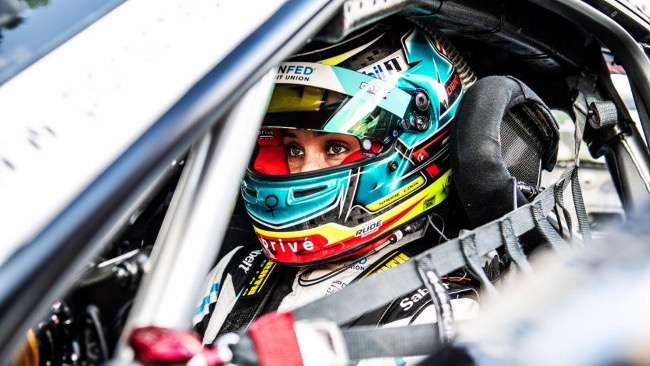
Are many women interested in the Porsche Cup, or in motorsport in general?
Absolutely. Motorsport attracts far more women today than many people think. There are female drivers, team principals, and engineers — and interest continues to grow. It is no longer an exclusively male domain. My daughters are big fans too. It is wonderful when a passion for motorsport can be shared within the family.
What are you most looking forward to this season?
The international events, and meeting our partners at the racetracks to exchange ideas. I am also very excited about the young talent now entering the series. There is a lot of potential there.
I wish you and your team every success — we will see each other in Monaco at the latest.